
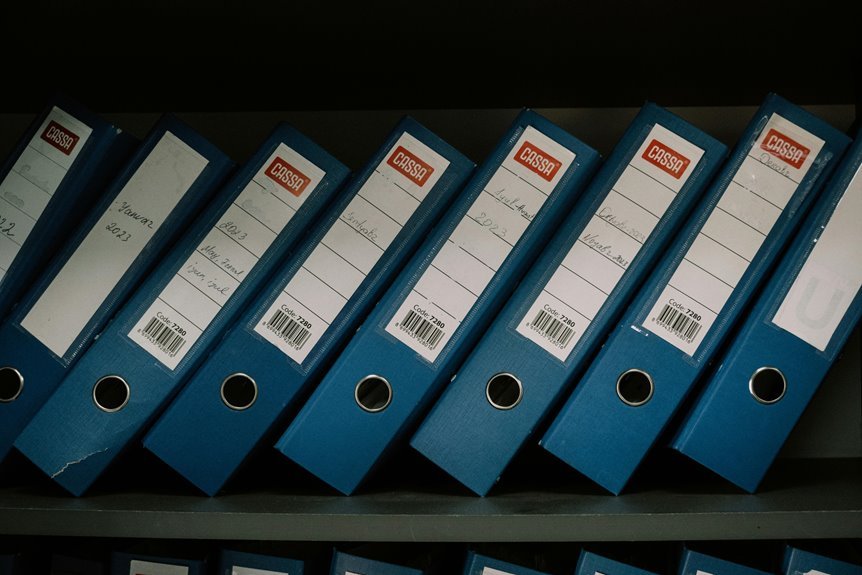
The Structured Data Monitoring Archive functions as a centralized, deterministic repository for tracking data health and evolution across projects. With traceable identifiers like 2483852651 and its peers, it enables fault isolation, reproducibility, and governance alignment. By capturing drift signals, quality metrics, and lineage, it converts irregularities into actionable insights. Its scalable approach supports phased adoption and automated validation, offering a clear pathway for modular decision-making, while leaving practitioners with unresolved questions to guide the next steps.
What the Structured Data Monitoring Archive Is Really For
The Structured Data Monitoring Archive serves as a centralized repository for tracking the evolution and health of structured data practices across projects.
It quantifies progress, reveals innovation gaps, and informs governance alignment, enabling scalable decision-making.
How Identifiers Like 2483852651 and Friends Drive Reliability
Identifiers like 2483852651 and its peers serve as deterministic anchors in structured data ecosystems, enabling consistent reference, traceability, and fault isolation. The analysis highlights how unique identifiers support modular architectures, enforce reproducibility, and curb ambiguity. By mapping identifiers to events, data provenance is clarified, boosting identifier reliability and facilitating scalable governance across distributed pipelines.
From Drift to Decision: Using the Archive to Improve Data Quality
From drift to decision, the archive acts as a centralized sensor for data quality, transforming irregularities into measurable signals that guide corrective action. It enables data governance through continuous monitoring, translating drift detection into tangible improvements.
Quality metrics provide objective progress, while data lineage clarifies root causes, ensuring scalable, repeatable processes that sustain trust and freedom in data-driven decisions.
Practical Roadmap: Implementing the Archive in Your Projects
How can teams operationalize an archive-driven approach to data quality across diverse projects? A practical roadmap prescribes governance milestones, repeatable workflows, and clear ownership. It emphasizes data governance, automated schema validation, and continuous auditing. Implement in modular phases: discovery, standardization, integration, and monitoring. Measure outcomes with dashboards, enforce policies, and scale processes to adapt to evolving requirements and technologies.
Frequently Asked Questions
How Is Data Privacy Handled in the Archive?
The archive enforces privacy controls and strict access permissions; data sharing is minimized and logged. Systematic governance enables scalable privacy safeguards, auditing trails, and selective disclosure, supporting an audience that desires freedom while preserving data integrity and confidentiality.
Can Non-Technical Teams Access the Archive Insights?
“Where there’s a will, there’s a way.” The archive supports non technical access via a user friendly interface, enabling broad, scalable insights while remaining analytical and systematic, suitable for audiences seeking freedom and responsible data exploration.
What Are the Licensing Terms for Archive Data?
The licensing terms govern use, redistribution, and attribution, while data privacy constraints limit sharing and derivations. The archive enforces clear access controls, audit trails, and scalable usage metrics to ensure compliant, freedom-oriented data exploration.
How Does the Archive Integrate With BI Tools?
Allegorically, the archive integrates with BI tools via standardized APIs, ensuring integration compatibility and scalable data contracts; it emphasizes audience accessibility, enabling dashboards and reports while preserving governance and traceability for unrestricted analytical freedom.
Is There an Offline Export Option for the Data?
The archive offers an offline export option, enabling data retrieval without live connections, while maintaining data privacy through controlled access, encryption, and audit trails. The approach prioritizes analytical reliability, scalability, and user autonomy for independent workflows.
Conclusion
The Structured Data Monitoring Archive consolidates drift signals, quality metrics, and lineage into a scalable governance framework. By making identifiers like 2483852651 and friends traceable, it enables deterministic fault isolation and reproducible audits across projects. An intriguing stat: organizations leveraging such archives report a median 42% faster defect resolution. This highlights the archive’s value in turning irregularities into actionable decisions, supporting systematic improvement and scalable, phased adoption.
